Executive Summary: Lady Lawyers in Karachi at a Glance
What this women-led family service covers
We advise and represent wives and mothers in khula, judicial divorce, recovery of dower and dowry articles, maintenance for themselves and their children, custody and visitation. The work covers advice, drafting of the family suit, appearances at reconciliation and evidence stages, and execution of the decree once it is passed.
Who usually asks for a female family lawyer
Women facing cruelty or desertion, women whose husbands have stopped maintenance, mothers worried about losing their children, and women abroad whose marriages in Karachi have broken down. Many prefer to explain private matters to a woman first, and families often feel more at ease when a female professional leads the conversation.
How the fee is worked out
There is no fixed package. The fee is quoted after the documents are reviewed, because a single khula suit is very different from a suit joined with dower, dowry, maintenance and custody claims. You receive the quotation before any filing, together with an explanation of what each stage involves.
How long family cases usually take
Uncontested khula can conclude within a few months where reconciliation fails early. Contested maintenance, dower or custody claims usually take longer, sometimes many months, depending on the court, service on the husband and the evidence. No timeline can be guaranteed, but we tell you honestly what to expect at each stage.
How to start: WhatsApp and documents
Send a message to our WhatsApp line with your Nikah Nama, CNIC copy, children's B-Forms if any, and a short account of what has happened. A member of the family team replies on the same working day where possible and arranges a private call or office meeting at a time that suits you.
Advocate-led since 1985
Karachi Lawyers belongs to the Qanoon Group network, an advocate-led practice dating from 1985 with about seventeen advocates, including two Advocates Supreme Court. That depth means a woman's case is never left to one person alone: family experience, court advocacy and appellate supervision work together on the same file.
Why women ask for Lady Lawyers in Karachi
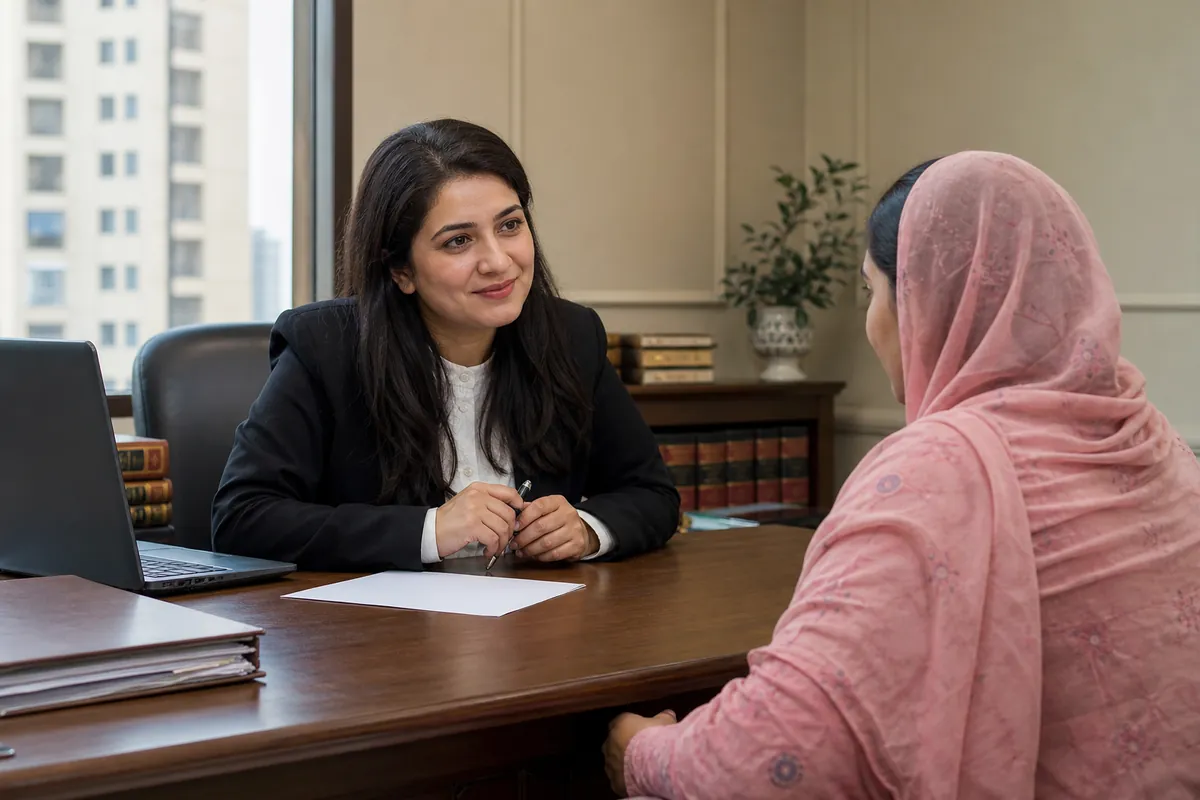
Family disputes involve details that many women find hard to share with a man they have just met: intimate matters, abuse, money withheld, or pressure from in-laws. Speaking first to a female expert often makes the account fuller and more accurate, and an accurate account is the foundation of a strong plaint.
There are practical reasons as well. Some clients cannot leave home freely, some are supported by a mother or sister who prefers to deal with a woman, and some are overseas. Our women-led team arranges calls at suitable hours and keeps communication discreet, using only the number or email the client chooses.
Cases our Lady Lawyers in Karachi handle for women
Khula
Dissolution of marriage at the wife's request through the family court where reconciliation fails.
Judicial divorce
Dissolution on grounds such as cruelty, desertion or non-maintenance under the 1939 Act.
Dower recovery
Claims for unpaid prompt or deferred dower recorded in the Nikah Nama.
Maintenance
Past and future maintenance for the wife and for each child, with interim orders.
Custody and visitation
Keeping young children with their mother and settling a fair meeting schedule.
Dowry articles
Return of jahez, gold and bridal gifts, or their value, from the husband's family.
Privacy and dignity: how Lady Lawyers in Karachi protect a client
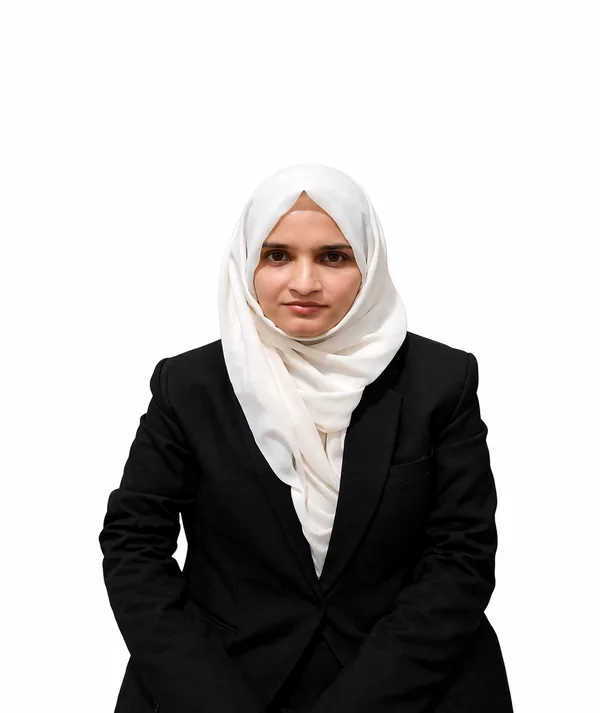
- Your first call or meeting can be held with Sobia Mohsin alone.
- We contact you only on the number or email you nominate, and never through relatives without your consent.
- Documents are kept on the file and are not shared beyond the advocates working on it.
- Where appropriate, we ask the family court to hear sensitive evidence in private.
- We prepare you before every hearing, so you know who will be present and what will be asked.
Privacy does not mean secrecy from the court. Family courts need the true facts, and our task is to present them carefully, without unnecessary exposure, so that your dignity is protected throughout the case.
Women's rights under Pakistani family law
The right to dower
Dower (haq mehr) belongs to the wife. Under the Muslim Family Laws Ordinance 1961, where the Nikah Nama does not specify how dower is to be paid, the whole amount is presumed payable on demand. Unpaid dower can be claimed in the family court, alone or with other claims.
The right to maintenance
A husband must maintain his wife during the marriage, and a father must maintain his children. If he fails, the wife may approach the family court for maintenance, and the court can fix interim maintenance early in the case so that she and the children are not left without support.
The right to seek khula
A wife who cannot continue the marriage may seek its dissolution by khula. The Family Courts Act 1964 sets the procedure: pre-trial reconciliation and, if it fails, a decree. The court may require her to give up dower or return benefits received from the husband, depending on the facts.
The delegated right of divorce
If the Nikah Nama delegates the right of divorce to the wife (talaq-e-tafweez), she may exercise it herself by following the notice procedure under the Muslim Family Laws Ordinance 1961, without filing a suit. We check the wording of the Nikah Nama before advising on this route.
The right to her dowry and gifts
The Dowry and Bridal Gifts (Restriction) Act 1976 provides that dowry and bridal gifts given to the bride vest in her absolutely. Jewellery, furniture and household articles brought by the wife remain hers, and the family court can order their return or payment of their value.
The right to custody of young children
Under Muslim personal law as applied in Pakistan, a mother generally has the first right to the custody (hizanat) of young children. The court decides every custody claim on the welfare of the child, under the Guardians and Wards Act 1890, and fixes visitation for the other parent.
Family court remedies available to women in Karachi
| Remedy | Main law | What the court can order | Key documents |
|---|---|---|---|
| Khula | Family Courts Act 1964 | Dissolution of the marriage after failed reconciliation | Nikah Nama, CNIC |
| Judicial divorce | Dissolution of Muslim Marriages Act 1939 | Dissolution on a proved statutory ground | Nikah Nama, evidence of the ground |
| Dower | Muslim Family Laws Ordinance 1961 | Payment of unpaid prompt or deferred dower | Nikah Nama showing the dower |
| Maintenance | Family Courts Act 1964 | Past, interim and future maintenance for wife and children | B-Forms, proof of expenses |
| Dowry articles | Dowry and Bridal Gifts (Restriction) Act 1976 | Return of articles or payment of their value | List, receipts, photographs |
| Custody | Guardians and Wards Act 1890 | Custody, visitation and interim arrangements | B-Forms, school records |
Steps with Lady Lawyers in Karachi from first call to decree
- Private first conversation on WhatsApp or in person, and review of the Nikah Nama and other papers.
- Written advice on the routes available and the claims that should be joined in one suit.
- Drafting of the plaint with the list of witnesses and documents, and filing in the competent family court.
- Service of summons on the husband, including by publication where his address is unknown.
- Pre-trial reconciliation; in khula, a decree may follow if reconciliation fails.
- Evidence, arguments and judgment on the remaining claims, followed by execution of the decree.
Attending a Karachi family court as a woman
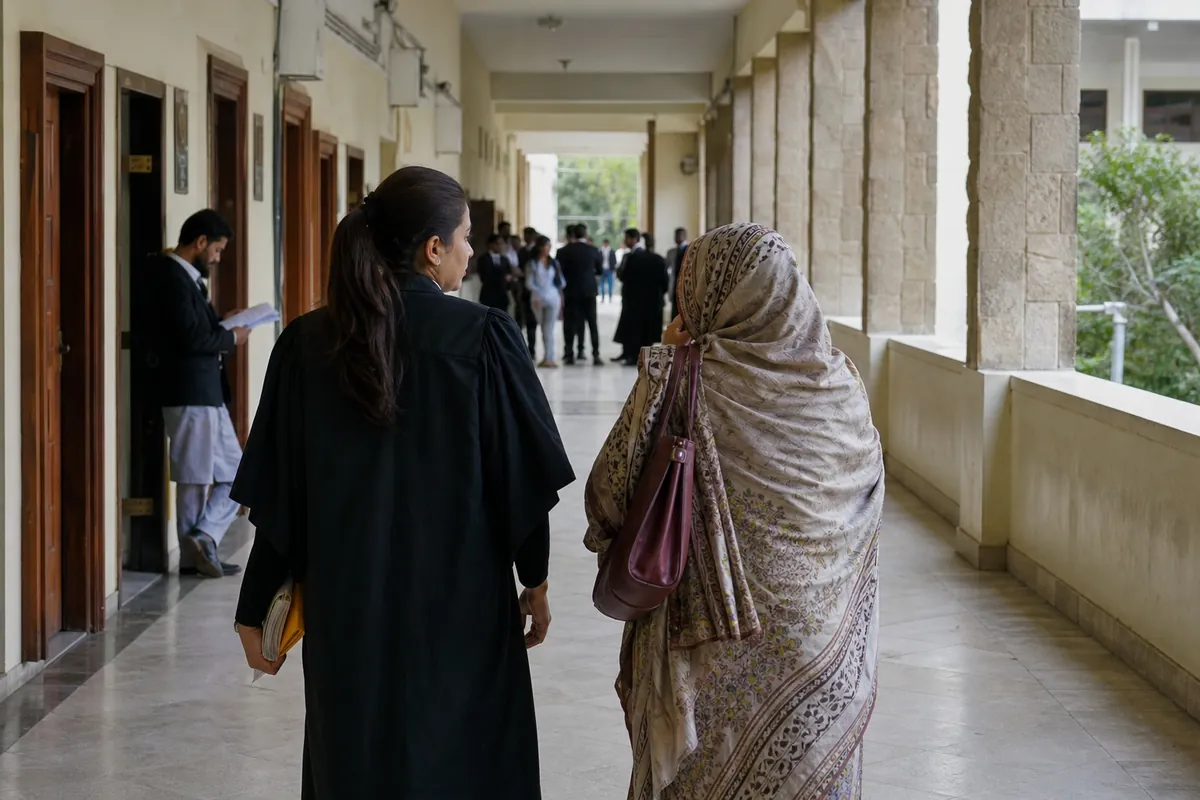
Family suits for dissolution, dower and maintenance can usually be filed in the family court where the wife ordinarily resides, which spares many women the cost of travelling to the husband's city. In Karachi, family courts sit in each district, including at the City Courts complex and the Malir courts.
Your advocate appears on most dates. Your personal attendance is needed mainly for reconciliation and for recording your evidence. We tell you in advance which dates matter, arrange for you to wait in a suitable place, and keep the time you spend in the court building as short as possible.
Interim maintenance while the case runs
A family court may order interim maintenance at an early stage, so that a wife and children are supported while the case continues. If the husband does not pay as ordered, the court can take strong action, and in practice his defence may be affected. Our Lady Lawyers in Karachi ask for interim maintenance in every suitable case.
Documents to bring to Lady Lawyers in Karachi
- Nikah Nama (the Union Council or NADRA copy, if available).
- Your CNIC and, if available, a copy of the husband's CNIC.
- B-Forms or birth certificates of the children.
- List of dowry articles and gold, with any receipts or photographs.
- Messages, medical reports or police complaints showing cruelty, if relevant.
- Evidence of the husband's income, business or property, however informal.
Common mistakes women make before seeing a lawyer
- Leaving the marital home without taking a list or photographs of their belongings.
- Signing blank papers or "settlement" documents prepared by the other family.
- Accepting a verbal talaq without checking whether notice has gone to the Union Council.
- Agreeing to give up children or dower under pressure in an informal panchayat.
- Waiting years before claiming maintenance, which makes past maintenance harder to prove.
Speak to Lady Lawyers in Karachi in confidence
If you are unsure what your rights are, a private conversation costs you nothing but a message. Our women-led family team will listen, explain the options in plain language and tell you what documents are needed. Related guidance is available on khula and divorce routes and child custody rights.
Frequently asked questions
Can I speak only to a woman at the first meeting?
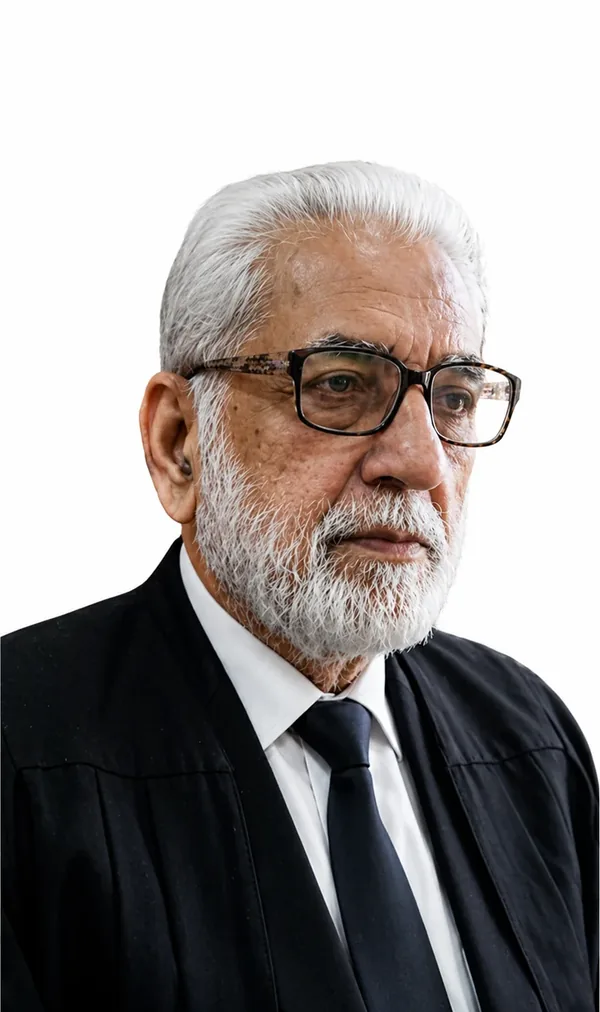
Yes. Your first call or meeting can be with Sobia Mohsin, Family Law Expert, who leads our family team. Court appearances are made by the firm's advocates, supervised by Syed Akhtar Rizvi, Advocate Supreme Court, and you will be told in advance who is handling each stage.
Do I have to attend every hearing in a khula case?
No. Your advocate appears on most dates. You will normally need to attend for reconciliation and when your evidence is recorded. We tell you beforehand which dates need your presence, so that you can plan travel, work and childcare.
Can I file in Karachi if my husband lives in another city?
Usually yes. Suits for dissolution, dower and maintenance may generally be filed in the family court where the wife ordinarily resides. We confirm the correct court on your facts before filing, because a suit in the wrong court wastes time.
Will my family or in-laws be told I have contacted lawyers?
No. We communicate only through the number or email you give us and do not contact relatives without your permission. Court papers are served on the husband in the ordinary way once a case is filed, so we plan the timing of filing with you.
Do I lose my dower if I seek khula?
Not automatically. The family court may require a wife seeking khula to give up dower or return benefits received, but this depends on the facts and on what has already been paid. Where the husband is at fault, judicial divorce on a statutory ground may protect the dower.
Can I claim maintenance for my children as well?
Yes. A father must maintain his children, and the family court can fix monthly maintenance for each child, along with interim maintenance while the case continues. Bring the B-Forms and details of school fees and other regular expenses to the first meeting.
I live abroad. Can Lady Lawyers in Karachi act for me?
Yes. Overseas clients usually sign a special power of attorney attested at the Pakistani mission and give evidence when required, which may include personal attendance. We advise on the documents and the stages where you must be present before the case begins.
What if my husband has taken my gold and jahez?
Make a list of the articles, with any receipts, photographs or witnesses, and claim their return in the family court. If the articles are not returned, the court can order payment of their value. Our page on dowry recovery explains the evidence in more detail.
How much do your Lady Lawyers in Karachi charge?
There is no fixed fee. The fee is quoted after the documents are reviewed, depending on how many claims are joined and whether the case is likely to be contested. You receive the quotation before anything is filed.
Is my information kept confidential?
Yes. Everything you tell the team is confidential and used only for your case. Documents stay on the file and are seen only by those working on it. Where sensitive evidence is involved, we may ask the court to hear it in private.
Speak to Karachi Lawyers about Lady Lawyers in Karachi
Karachi Lawyers has practised since 1985 and has about 17 advocates, including two Advocates Supreme Court. Send a WhatsApp message to +92 333 1127830 with your name, a two-line summary of the matter, any deadline or hearing date, and photos of the key documents. We will tell you what the law requires, which documents are missing and what the next step is, and fix an appointment at our Gulistan-e-Jauhar office (Mezzanine Floor, Muneer Mobile Mall, Block 17) or our DHA office (Mezzanine Floor, Main Jami Commercial, Phase 7). We explain the scope of work before you instruct us, and we never promise an outcome we cannot control.
Related services from Karachi Lawyers
Official sources
For reference only. Procedures and charges change; confirm the current position for your own case.
This page gives general information about the law in Pakistan and is not legal advice for your particular case. No outcome, timeline or fee can be guaranteed before your documents and circumstances have been reviewed.
Reviewed by: Syed Akhtar Rizvi, Advocate Supreme Court
Published by: Karachi Lawyers
Last updated: