
Executive Summary: Recovery Suits in Karachi in brief
What the service is
We assess your evidence of the debt, send a legal notice, and where payment is not made, file the appropriate suit — a summary suit on a negotiable instrument or an ordinary suit for recovery — and then pursue execution of the decree.
Who needs it
Individuals who lent money to friends or relatives, suppliers and contractors with unpaid invoices, landlords owed rent arrears or damages, and anyone holding a dishonoured cheque. We also defend people sued for amounts they dispute.
Fee basis
The fee depends on the amount, the court and the strength of the documents. It is quoted after the documents are reviewed. Court fee under the court-fees law is payable on the claim value and is shown separately.
Time it usually takes
A legal notice can be sent within a few days. Summary suits may move faster than ordinary suits if leave to defend is refused, but contested suits commonly run from many months to a few years. No timeline is guaranteed.
How to start
WhatsApp a short note of who owes what, since when, and photos of the cheque, agreement, receipts or chats to +92 333 1127830. We check limitation first, because a time-barred claim cannot be revived.
Advocate-led since 1985
Our civil practice has been advocate-led since 1985, with about seventeen advocates in the network, including two Advocates Supreme Court for High Court work. Each file is assessed by a senior advocate before advice is given, and you deal directly with the lawyer handling your matter.
Routes to recover money compared
There is more than one route, and they can sometimes run side by side. The table sets out the main options and what each one actually achieves.
| Route | Law | What it achieves |
|---|---|---|
| Legal notice | Demand before action | Formal demand; often prompts payment or settlement |
| Summary suit | Order XXXVII, Code of Civil Procedure 1908 | Fast-track decree on cheques and other negotiable instruments |
| Ordinary recovery suit | Code of Civil Procedure 1908 | Decree for money on loans, invoices and contracts |
| Criminal complaint | Section 489-F, Pakistan Penal Code 1860 | Prosecution for dishonestly issuing a cheque that bounces |
| Execution | Order XXI, Code of Civil Procedure 1908 | Enforcing the decree against assets or salary |
Legal notices before Recovery Suits in Karachi
A well-drafted legal notice states the debt, the documents relied on, a deadline for payment and the action that will follow. It is often enough on its own. It also fixes the record if the debtor later claims the money was a gift or already repaid.
Summary suits on cheques and negotiable instruments
What qualifies
Order XXXVII of the Code of Civil Procedure 1908 provides a summary procedure for suits on bills of exchange, hundis and promissory notes. A cheque is a bill of exchange, so a dishonoured cheque is the most common basis for a summary suit in Karachi.
Leave to defend
In a summary suit the defendant cannot defend as of right. He must apply for leave to defend within the short time fixed by the rules and show a plausible defence. If leave is refused, the court can pass a decree without a full trial.
Conditional leave
Courts sometimes grant leave on condition that the defendant deposits the amount or furnishes security. This gives the plaintiff real protection while the case is decided on its merits.
Dishonoured cheques: the criminal side
Section 489-F of the Pakistan Penal Code 1860 makes it an offence to dishonestly issue a cheque towards repayment of a loan or fulfilment of an obligation that is then dishonoured. Dishonesty must be shown, and a criminal case does not itself produce a money decree, so most clients pair it with a civil claim on careful advice.
Ordinary suits for recovery of money
Where there is no negotiable instrument — an unpaid invoice, an oral loan backed by bank transfers, a breached supply contract — the claim proceeds as an ordinary suit. The plaintiff proves the debt through documents and witnesses, and the court may also award interest or costs where the law and contract allow.
Limitation for Recovery Suits in Karachi
The Limitation Act 1908 fixes the time for filing. Many money claims carry a three-year period, but the starting date differs for loans, invoices, cheques and accounts. A written acknowledgment of the debt can restart the clock. Check limitation first; a late claim must be dismissed.
Which court hears Recovery Suits in Karachi
Smaller claims go to the civil courts of the district where the defendant lives or the cause arose. Larger claims are filed on the original side of the Sindh High Court above a pecuniary limit that has changed over time, so we confirm the current threshold before filing.
Evidence that wins recovery cases
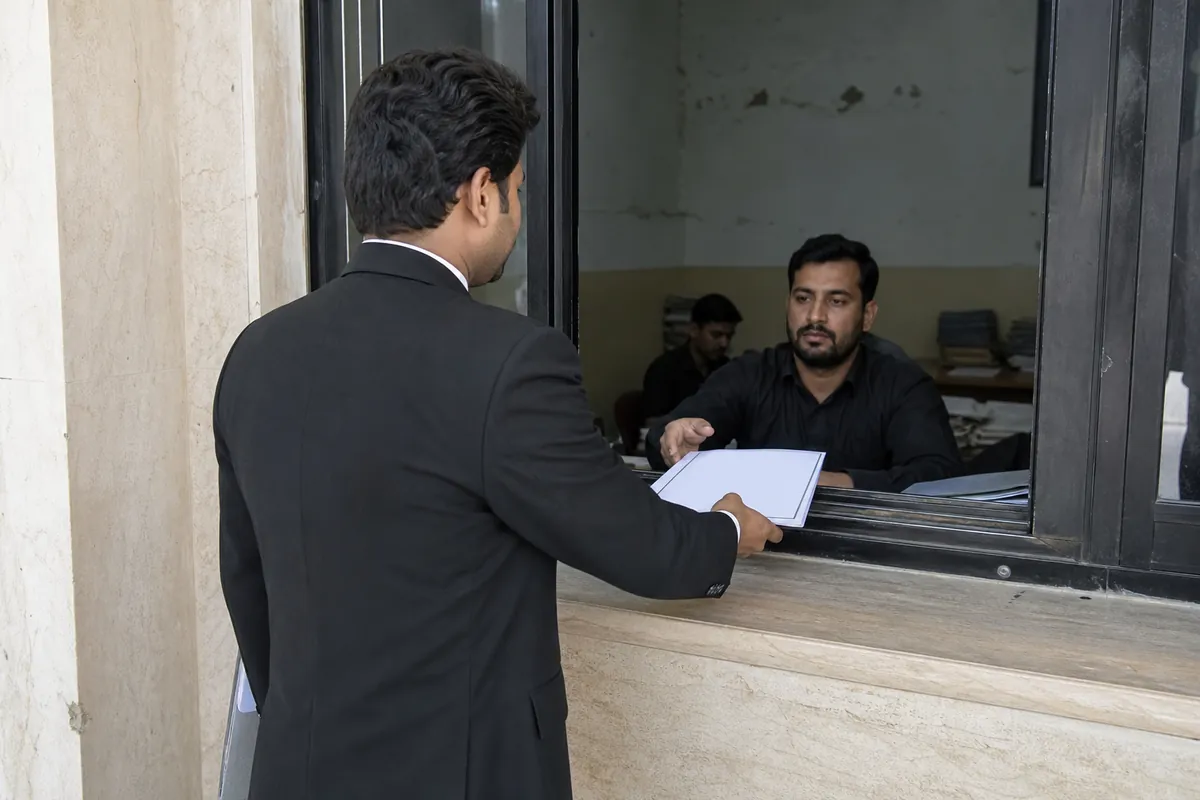
- The cheque and the bank's return memo, kept in original.
- Written agreements, promissory notes or acknowledgments of debt.
- Bank statements showing the money transferred to the debtor.
- Invoices, delivery notes and purchase orders for trade debts.
- Messages or emails in which the debtor admits the amount.
Executing the decree
- Apply for execution once the decree is passed and not stayed.
- Identify the judgment debtor's bank accounts, property, vehicles or salary.
- Seek attachment of the identified assets through the executing court.
- Sale of attached property or payment out of attached funds.
- Arrest and detention in civil prison is available only in limited circumstances set by the Code.
Defending Recovery Suits in Karachi
If you have been sued, the first deadline matters most. In a summary suit, the application for leave to defend must be filed within the short period the rules fix, supported by an affidavit showing a genuine defence such as payment, a misused security cheque or no underlying debt. In an ordinary suit, a written statement is filed instead.
Security cheques and post-dated cheques
Cheques are often handed over as security for a business arrangement or as post-dated instalments. Whether a dishonoured security cheque supports a summary suit or a criminal case depends on whether a debt was actually due when it was presented. These cases turn on documents, so keep the underlying agreement.
Recovering trade debts from businesses
For suppliers and service providers, the strongest claims rest on purchase orders, delivery challans signed by the buyer, invoices and statements of account acknowledged by the customer. Where the debtor is a company, the suit is filed against the company; directors are not personally liable unless they gave a personal guarantee or the law otherwise makes them so.
Rent arrears and security deposits
Landlords owed rent in Karachi usually raise the default before the Rent Controller in ejectment proceedings under the Sindh Rented Premises Ordinance 1979. Tenants seeking return of a security deposit after vacating generally need a civil claim, supported by the tenancy agreement, the deposit receipt and proof of handing over possession.
Costs and realistic expectations in Recovery Suits in Karachi
A decree is only as good as the debtor's ability to pay. Before filing, we look at whether the defendant has a salary, a business, bank accounts or property that execution could reach. Where recovery looks unlikely, a written instalment agreement may produce more money sooner than litigation.
Why clients use our team for Recovery Suits in Karachi
- Limitation and forum checked before any money is spent.
- Notices drafted to stand up as evidence later.
- Summary suits, ordinary suits, criminal advice and execution handled in one file.
- Plain advice when a claim is not worth pursuing.
Related services
General civil litigation: civil lawyers in Karachi. How a suit moves through court: civil procedure in Pakistan. Unpaid wages and dues: workers rights lawyers.
Frequently asked questions
Do I need a legal notice before filing a recovery suit?
It is not always compulsory, but a notice is strongly advised. It often produces payment, creates a record of the demand, and helps with costs. Notices are mandatory before suing government bodies under some laws.
Can I file a summary suit on a bounced cheque?
Yes. A cheque is a bill of exchange, so a dishonoured cheque can found a summary suit under Order XXXVII of the Code of Civil Procedure 1908. The defendant must obtain leave to defend, which speeds up straightforward cases.
Should I also lodge a criminal case under section 489-F?
Possibly, but take advice first. Section 489-F PPC requires dishonest issue of the cheque for a loan or obligation. A criminal case punishes the offence; it does not itself give you a money decree, so a civil claim is usually still needed.
How long do I have to file?
The Limitation Act 1908 fixes the period. Many money claims have three years, but the date from which time runs varies with the type of claim. A written acknowledgment of debt may extend it. Do not wait to find out.
What if I lent money without any written agreement?
You can still sue, but proof matters. Bank transfers, messages admitting the loan, and witnesses can establish the debt. We assess the evidence before advising whether Recovery Suits in Karachi are worth bringing.
Which court will hear my case?
Smaller claims go to the district civil court; larger claims go to the Sindh High Court on its original side above the current pecuniary limit. The correct court also depends on where the defendant resides or the cause of action arose.
Can the court make the defendant deposit the money?
In a summary suit, the court may grant leave to defend only on condition that the amount is deposited or security is given. In ordinary suits, attachment before judgment is possible in limited circumstances where the defendant is disposing of assets.
What happens after I win?
If the defendant does not pay, you apply to execute the decree. The court can attach bank accounts, property or salary, and order sale of attached assets. Execution needs active follow-up, which we handle.
Can I claim interest and costs?
Where the contract or the law allows, the court may award interest and costs in addition to the principal amount. The plaint must claim them specifically, and the award remains at the court's discretion.
What will it cost to recover my money?
Court fee depends on the amount claimed and is fixed by law. Our professional fee depends on the route and the court, and is quoted after the documents are reviewed. We will tell you frankly if the claim is not worth pursuing.
Speak to Karachi Lawyers about Recovery Suits in Karachi
Karachi Lawyers has practised since 1985 and has about 17 advocates, including two Advocates Supreme Court. Send a WhatsApp message to +92 333 1127830 with your name, a two-line summary of the matter, any deadline or hearing date, and photos of the key documents. We will tell you what the law requires, which documents are missing and what the next step is, and fix an appointment at our Gulistan-e-Jauhar office (Mezzanine Floor, Muneer Mobile Mall, Block 17) or our DHA office (Mezzanine Floor, Main Jami Commercial, Phase 7). We explain the scope of work before you instruct us, and we never promise an outcome we cannot control.
Related services from Karachi Lawyers
Official sources
For reference only. Procedures and charges change; confirm the current position for your own case.
This page gives general information about the law in Pakistan and is not legal advice for your particular case. No outcome, timeline or fee can be guaranteed before your documents and circumstances have been reviewed.
Reviewed by: Syed Akhtar Rizvi, Advocate Supreme Court
Published by: Karachi Lawyers
Last updated: