

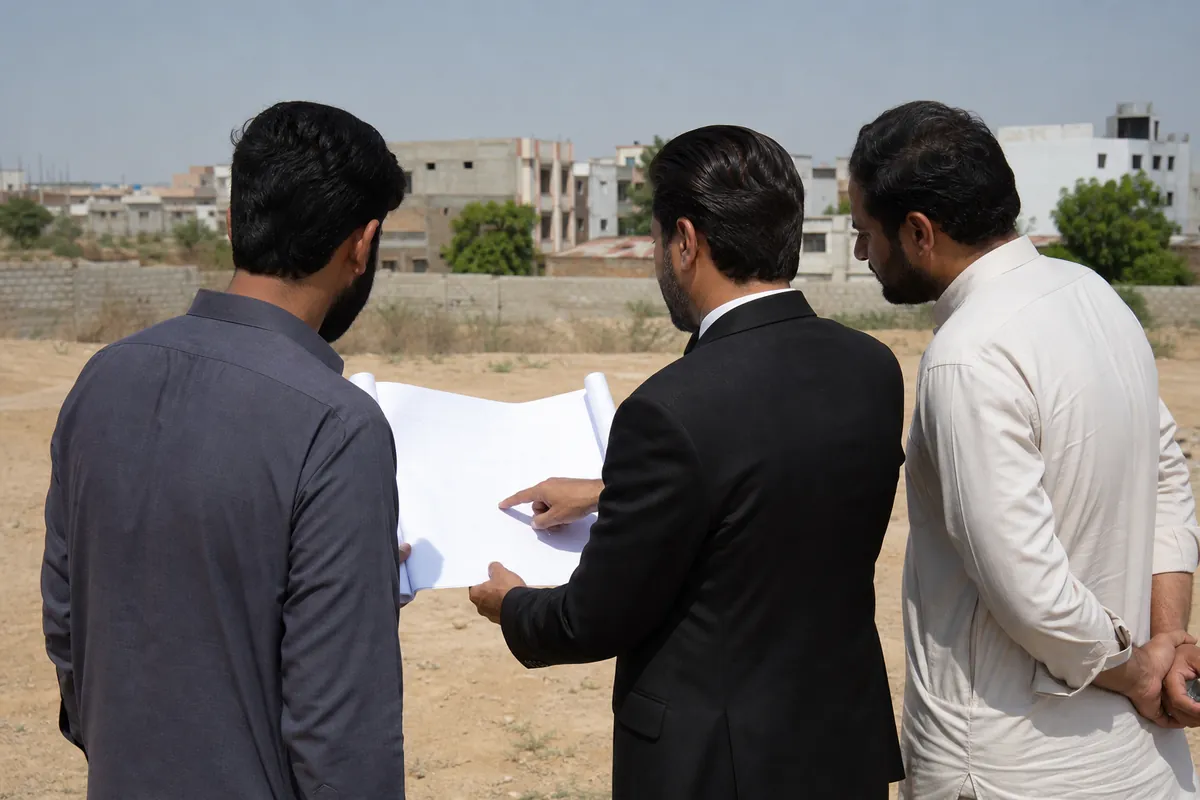
Executive Summary: how Property Dispute Lawyers in Pakistan help
What the service is
Litigation and negotiated settlement of disputes over immovable property: partition among co-owners and heirs, specific performance of sale agreements, recovery of possession, illegal dispossession complaints, declarations of title and injunctions to preserve the property while the case runs.
Who needs it
Heirs locked in disagreement over a parent's estate, buyers whose seller refuses to complete, owners whose property has been occupied, and people served with a suit or stay order affecting land they hold.
Fee basis
Property cases vary greatly in value, number of parties and documents. The fee is quoted after the documents are reviewed and a strategy is agreed. Court fee is payable under the court-fees law on the relief claimed and is shown separately.
Time it usually takes
Interim injunction applications can be heard within days of filing in urgent cases. Full trials commonly take from one to several years depending on the court, parties and evidence. We give honest ranges and no guaranteed outcomes.
How to start
Send copies of the title documents, any agreement, payment proof and court papers on WhatsApp to +92 333 1127830. Tell us who is in possession today, because possession often decides which remedy and which urgency apply.
Advocate-led since 1985
The practice has been advocate-led since 1985. About seventeen advocates work in the network, including two Advocates Supreme Court for appeals and revisions. Each file is assessed by a senior advocate before advice is given, and you deal directly with the lawyer handling your matter.
Disputes our Property Dispute Lawyers in Pakistan handle
Partition among co-owners
Dividing jointly owned property by metes and bounds or by sale and distribution of proceeds.
Specific performance
Compelling a seller to execute the sale deed under the Specific Relief Act 1877.
Illegal dispossession
Complaints under the Illegal Dispossession Act 2005 against unlawful occupation.
Co-heir disputes
Claims by heirs excluded from inherited property or denied their share.
Injunctions
Orders to stop sale, construction or demolition while the case is pending.
Declaration of title
Suits for a declaration that you are the lawful owner of the property.
Partition of jointly owned property
Where property is held jointly, any co-owner can usually seek partition. The court determines each share, then divides the property physically where practicable, or orders sale and distribution where division would destroy its value. Family settlements recorded properly can avoid years of litigation.
Inheritance disputes among co-heirs
Shares of Muslim heirs are fixed by their personal law, and no heir can lawfully exclude another, including daughters and widows. Disputes arise when one heir keeps possession or transfers the property alone. Remedies include partition, declaration, cancellation of fraudulent transfers and accounts of rent received.
Specific performance of sale agreements
If a seller signs an agreement, takes earnest money and then refuses to transfer, the buyer may sue for specific performance within the limitation period. Relief is discretionary: the buyer must show readiness and willingness to pay the balance, and the court weighs the conduct of both sides.
Illegal dispossession and recovery of possession
Illegal Dispossession Act 2005
The Act allows a complaint before the Court of Session against a person who enters into or grabs property without lawful authority, with a view to dispossess the owner or occupier. It is a criminal remedy aimed at land grabbing and can lead to restoration of possession.
Civil suit for possession
Under the Specific Relief Act 1877, a person dispossessed without his consent and otherwise than in due course of law may sue for possession under section 9 within six months, without proving title. Outside that window, a regular suit based on title is used.
Choosing between them
The criminal complaint suits clear cases of grabbing; title disputes between relatives usually belong in civil court. We look at the facts before choosing, because the wrong forum can waste valuable time.
Injunctions and declarations
A suit for declaration of title, commonly under section 42 of the Specific Relief Act 1877, is often filed with an application for temporary injunction under Order XXXIX of the Code of Civil Procedure 1908. The court considers a prima facie case, the balance of convenience and irreparable loss.
Remedies at a glance
Different problems call for different remedies. This table matches the common situations to the usual starting point; the final choice always depends on documents, possession and limitation.
| Situation | Usual remedy | Main law |
|---|---|---|
| Heirs cannot agree on division | Suit for partition | Code of Civil Procedure 1908 and personal law |
| Seller refuses to transfer | Specific performance | Specific Relief Act 1877 |
| Property grabbed by outsiders | Complaint for restoration | Illegal Dispossession Act 2005 |
| Recent dispossession without title dispute | Suit for possession within six months | Specific Relief Act 1877, section 9 |
| Ownership challenged on paper | Declaration with injunction | Specific Relief Act 1877; Order XXXIX CPC |
First steps Property Dispute Lawyers in Pakistan take
- Secure certified copies of title documents and the authority, society or revenue record.
- Establish who is in possession and gather proof such as utility bills and photographs.
- Check limitation for each possible remedy.
- Send a legal notice where it may produce settlement without losing urgency.
- File suit or complaint with an interim application where the property is at risk.
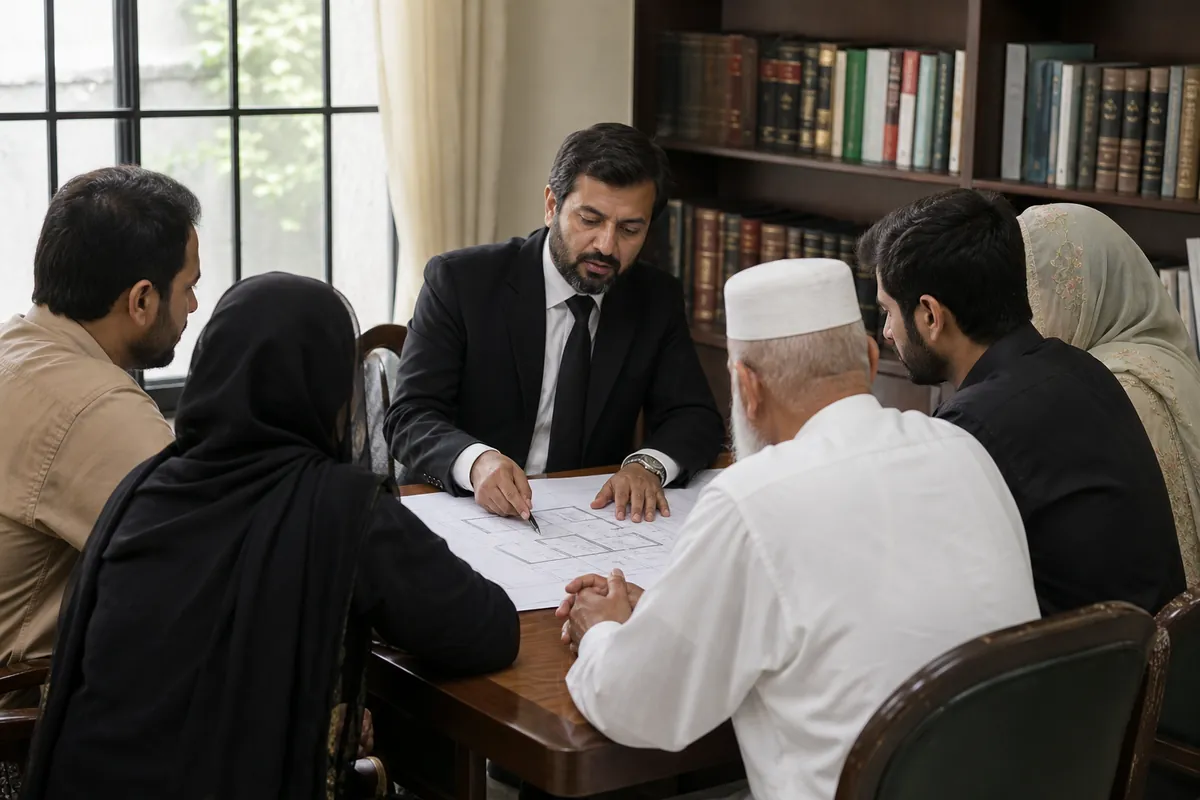
Settlement and family arrangements
Many co-heir disputes end in a written family settlement once each side sees the legal position. We draft settlements that identify each share, provide for buy-outs and are executed and registered where required, so the dispute does not return with the next generation.
Evidence Property Dispute Lawyers in Pakistan gather
- Certified copies of the title chain and registered instruments.
- Authority, society or revenue record entries and mutation history.
- Proof of possession: utility bills, tax receipts, photographs and witnesses.
- Payment records for any sale agreement in dispute.
- Succession documents and a family tree in inheritance cases.
Fraudulent transfers and forged documents
Where property has been transferred on a forged power of attorney, by an impersonated seller or through a fabricated gift, the affected owner can seek cancellation of the instrument and a declaration of title. Parallel criminal proceedings for forgery may also be possible. Acting quickly limits onward sales to other buyers.
Mutation and revenue record disputes
Mutation entries in revenue records are made for fiscal purposes and do not by themselves create title, yet many disputes over agricultural and peri-urban land start with a wrong mutation. Correction may be sought from the revenue authorities, while questions of title are decided by the civil court.
Disputes with tenants and licensees
A tenant who stops paying or refuses to leave is usually dealt with under the rent law of the province; in Karachi that is the Sindh Rented Premises Ordinance 1979 before the Rent Controller. A relative or caretaker allowed to live in a house as a licensee raises different questions, and a civil suit may be the remedy.
Property Dispute Lawyers in Pakistan for overseas owners
Owners living abroad are frequent targets of occupation and fraudulent sale. Through a specific power of attorney attested at the Pakistani mission, we can file suits and pursue hearings on your behalf, while your own evidence is given on a visit or in any other manner the court permits.
Appeals handled by Property Dispute Lawyers in Pakistan
A decree in a property suit can be challenged by first appeal and, in limited cases, by revision before the High Court. Appeal periods are short and counted in days. Syed Akhtar Rizvi, Advocate Supreme Court, leads our appellate work when a property case goes beyond the trial court.
Why choose our Property Dispute Lawyers in Pakistan
- Possession and limitation assessed before any filing.
- Civil and criminal remedies considered together.
- Local advocates in Karachi, Lahore, Islamabad and Rawalpindi.
- Settlement pursued wherever it serves the client better.
Related services
Checks before buying: Property Lawyers in Pakistan and Property Lawyers in Karachi. How a civil case runs: civil procedure in Pakistan. Succession papers for heirs: child custody and guardianship where minors inherit.
Appeals, inheritance and succession in property disputes
Where a dispute has reached the higher courts, our network page on property lawyers describes appeal work. If the registered owner has died, heirs usually need a succession certificate before title can move, and the Islamic inheritance calculator gives a first estimate of shares.
Frequently asked questions
Can a co-owner force the sale of family property?
A co-owner can seek partition. The court first decides each share and divides the property where practicable; where physical division is not sensible, it may order sale and distribution of the proceeds. A negotiated settlement is often quicker.
Can my brothers deny my share in our father's house?
No heir can lawfully exclude another from the share fixed by personal law, including daughters and widows. If you are being kept out, remedies include partition, declaration and cancellation of any transfer made without your consent.
The seller took earnest money and refuses to transfer. What can I do?
You may sue for specific performance under the Specific Relief Act 1877 within the limitation period, showing that you were ready and willing to pay the balance. Alternatively you may claim refund with compensation, depending on the agreement.
What is the Illegal Dispossession Act 2005?
It provides a criminal complaint before the Court of Session against people who unlawfully enter or grab property to dispossess the owner or lawful occupier. It is aimed at land grabbers and can result in restoration of possession.
Is there a quick civil remedy if I was recently dispossessed?
Yes. Section 9 of the Specific Relief Act 1877 allows a suit for possession within six months of dispossession without proving title. After six months, a regular suit based on title is needed.
How can I stop someone selling disputed property?
By filing a suit with an application for temporary injunction under Order XXXIX of the Code of Civil Procedure 1908. The court considers whether you have a prima facie case, where the balance of convenience lies and whether you would suffer irreparable loss.
Do you handle property disputes outside Karachi?
Yes. Advocates from our network handle cases in Lahore, Islamabad and Rawalpindi through local advocates, because cases must be filed where the property is situated.
How long will my property case take?
Interim relief can sometimes be obtained within days. A full trial commonly takes from one to several years depending on the court, number of parties and evidence. We give honest ranges and never promise a result.
Can a property dispute be settled out of court?
Yes, and many are. A written settlement or family arrangement, properly executed and registered where required, can end the dispute. Courts also encourage compromise, which can be recorded and turned into a decree.
What is your fee for property litigation?
Fees depend on the value of the property, the number of parties and the remedies needed. The fee is quoted after the documents are reviewed, and court fee payable under the law is shown separately.
Speak to Karachi Lawyers about Property Dispute Lawyers in Pakistan
Karachi Lawyers has practised since 1985 and has about 17 advocates, including two Advocates Supreme Court. Send a WhatsApp message to +92 333 1127830 with your name, a two-line summary of the matter, any deadline or hearing date, and photos of the key documents. We will tell you what the law requires, which documents are missing and what the next step is, and fix an appointment at our Gulistan-e-Jauhar office (Mezzanine Floor, Muneer Mobile Mall, Block 17) or our DHA office (Mezzanine Floor, Main Jami Commercial, Phase 7). We explain the scope of work before you instruct us, and we never promise an outcome we cannot control.
Related services from Karachi Lawyers
Official sources
For reference only. Procedures and charges change; confirm the current position for your own case.
This page gives general information about the law in Pakistan and is not legal advice for your particular case. No outcome, timeline or fee can be guaranteed before your documents and circumstances have been reviewed.
Reviewed by: Syed Akhtar Rizvi, Advocate Supreme Court
Published by: Karachi Lawyers
Last updated: