

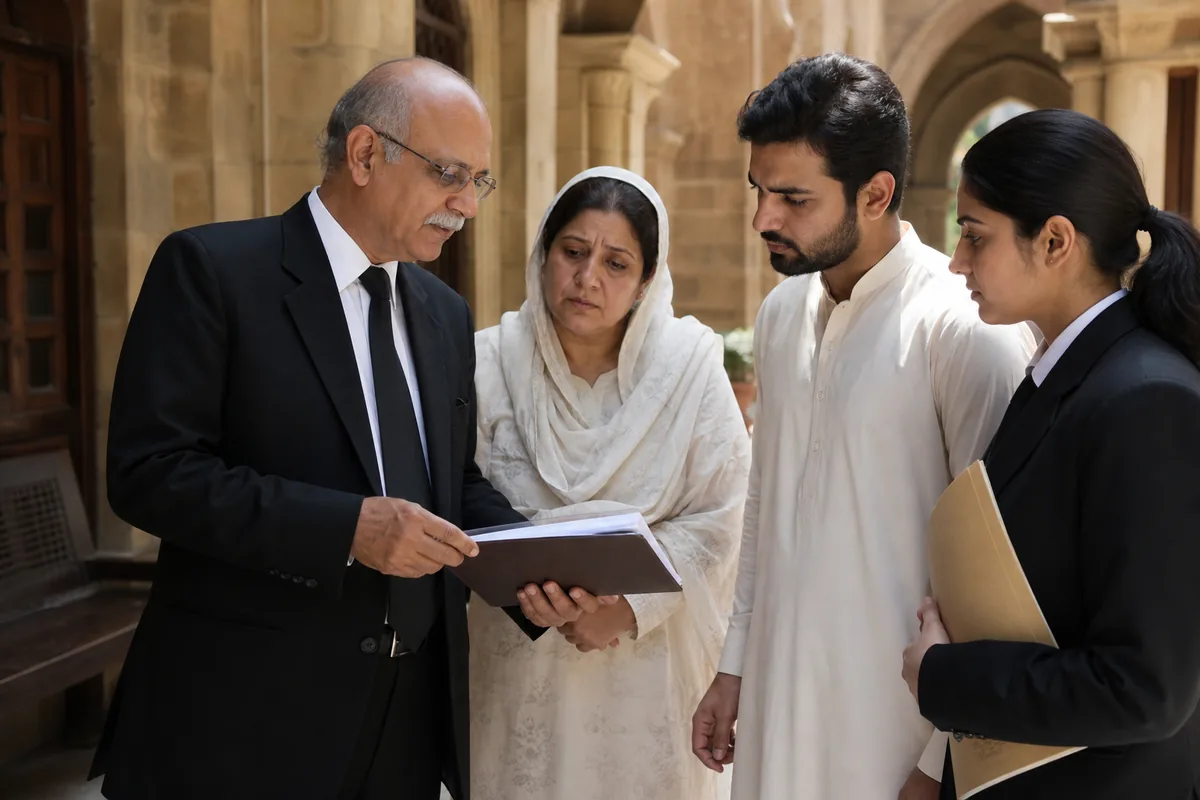
Executive Summary: Bail Lawyers in Karachi at a Glance
What bail is
Bail is the release of an accused person from custody, or protection from arrest, on a bond and usually a surety, on the condition that he attends court. In Pakistan it is governed by the Code of Criminal Procedure 1898: section 496 for bailable offences, section 497 for non-bailable offences and section 498, which the courts use for pre-arrest bail.
Who needs it
Anyone named in an FIR who fears arrest, a person already arrested by the police, and the family of someone in custody. Complainants also come to us when they want a bail granted to the accused to be cancelled.
What it costs
Our professional fee is quoted in writing after we read the FIR and any court orders. It depends on the offence, the court and whether the application is for pre-arrest or post-arrest bail. We do not publish government fee figures, and the amount of any surety bond is fixed by the court, not by us.
How long it takes
We do not guess dates. When the application is heard depends on the court's list, the police report and adjournments. What we can do is file promptly and make sure the file is complete, so the hearing is not lost for want of a document.
How to start
Send the FIR, the names of the police station and investigating officer if known, and the date of any arrest on WhatsApp. We tell you which court to approach first, what surety papers to arrange and when the accused must appear.
Bailable and Non-Bailable Offences: What Bail Lawyers in Karachi Check First
The Second Schedule to the Code of Criminal Procedure states for each offence in the Pakistan Penal Code whether it is bailable. Where the offence is bailable, section 496 makes bail a right: the police officer or the court must release the accused once he is ready to give bail.
Where the offence is non-bailable, bail is in the court's discretion under section 497. That is where a bail lawyer's work matters most, because the application has to show the court why release is justified on the facts of the FIR and the record collected so far.
Pre-Arrest Bail: How Bail Lawyers in Karachi Seek Protection Before Arrest
Pre-arrest bail protects a person from being arrested in a case that has been registered against him. The courts grant it under section 498 of the Code, through the Court of Session or the High Court. It is treated as an extraordinary relief: the applicant generally has to show that the accusation appears to be motivated by malice or an ulterior purpose and that arrest would cause him undue harassment or humiliation, as well as a case on the merits.
The applicant must appear in person. The court may grant interim pre-arrest bail at the first hearing, subject to a surety bond, and then confirm or recall it after hearing the prosecution. Missing a date can lead to the bail being recalled and arrest following, so we keep clients informed of every hearing.
Post-Arrest Bail After Custody
Once a person has been arrested, the application is made under section 497. Bail Lawyers in Karachi usually file it first before the Court of Session; if bail is refused there, a fresh application can be made to the Sindh High Court. Cases under special laws, such as anti-terrorism or narcotics laws, have their own bail provisions and forums, and we check which law applies before filing.
Section 497 also contains special provisions: the court may release a woman, a minor, or a person who is sick or infirm even in a serious case, and an accused who has been detained beyond the statutory period set in the section without the trial concluding becomes entitled to bail unless the delay was caused by him.
What the Court Looks At in a Bail Application
- Whether the offence falls within the prohibitory clause of section 497(1), that is, an offence punishable with death, imprisonment for life or imprisonment for ten years.
- Whether there are reasonable grounds to believe the accused committed the offence, or whether the case calls for further inquiry under section 497(2).
- Delay in lodging the FIR, contradictions in the record and the role attributed to the accused.
- Whether the accused is likely to abscond, tamper with evidence or influence witnesses.
- The accused's age, health and family circumstances, and whether he has previous convictions.
Documents Bail Lawyers in Karachi Need
Clear photos on WhatsApp are enough for our first review. Originals of the surety papers are needed before the bond is filed.
- A copy of the FIR, or its number, the police station and the date.
- Any court order already passed, including an earlier bail refusal.
- The accused person's CNIC and, if he is in custody, the date and place of arrest.
- Medical records, if illness is a ground for bail.
- The surety's CNIC and the property or other papers the court may ask for to support the surety bond.
How a Bail Application Moves in Karachi Courts
- Review: a lawyer reads the FIR and the sections applied, and decides whether the offence is bailable, whether pre-arrest or post-arrest bail is needed and which court to approach first.
- Drafting: we prepare the application with the grounds on the facts, attach the FIR and relevant documents and file it in the Court of Session or the Sindh High Court.
- Notice: the court calls for the police record and hears the prosecution. In pre-arrest cases the applicant attends every date.
- Hearing: we argue the application on the record. The court grants bail on a bond with surety, or refuses it with reasons.
- Surety and release: if bail is granted, the surety bond is verified and filed, and a release order is sent where the accused is in custody.
- After bail: the accused must attend every hearing of the trial. If bail is refused, we advise on a fresh application in the higher court.
Bail Lawyers in Karachi Compared by Route
Different stages of a case call for different applications. This table sets out the main routes we handle.
| Route | Provision | When it is used |
|---|---|---|
| Bail in a bailable offence | Section 496 CrPC | The offence is listed as bailable; release is a right on giving bail |
| Post-arrest bail | Section 497 CrPC | The accused is in custody in a non-bailable offence |
| Pre-arrest bail | Section 498 CrPC | An FIR is registered and arrest is feared on mala fide grounds |
| Cancellation of bail | Section 497(5) CrPC | A complainant asks the court to cancel bail already granted |
Cancellation of Bail and How Bail Lawyers in Karachi Respond
Bail is not final. Under section 497(5), the High Court or the Court of Session can cancel bail and order the accused to be taken into custody, for example where he misuses it, threatens witnesses or does not attend court. We act for complainants who seek cancellation and for accused persons who need to defend a bail already granted.
Why Families Choose Our Bail Lawyers in Karachi
Karachi Lawyers has practised in the city's courts since 1985 and now has about 17 advocates, including two Advocates Supreme Court. Bail files are reviewed by Syed Akhtar Rizvi, Advocate Supreme Court. Families can speak in Urdu or English, and a woman lawyer is available for women clients and for the families of women in custody.
We tell you honestly what the FIR shows, what the court is likely to consider and what could go wrong. We never promise that bail will be granted or name a date that depends on the court.
Bail Lawyers in Karachi and the Rest of the Criminal Case
Bail is only one stage. For the FIR, quashment, trial defence and appeals, see our page on criminal lawyers in Karachi. Where a dispute over a plot or house has turned into a criminal complaint, our property lawyers in Karachi deal with the civil side, and money disputes that started as a cheque or a loan often also need civil lawyers in Karachi. Clients with a case in the capital as well can use our network's criminal lawyers in Karachi and Islamabad.
Frequently asked questions
What is the difference between pre-arrest and post-arrest bail?
Pre-arrest bail protects a person from arrest in a registered case and is granted under section 498 of the Code of Criminal Procedure. Post-arrest bail is release after an arrest, applied for under section 497 in non-bailable offences.
Is bail a right?
In a bailable offence, yes: section 496 makes release a right once bail is given. In a non-bailable offence, bail is in the court's discretion under section 497.
Which court do we apply to first?
Usually the Court of Session in the district where the case is registered. If it refuses bail, a fresh application can be made to the Sindh High Court. Special laws can have their own forums.
Does the accused have to attend the pre-arrest bail hearing?
Yes. The applicant for pre-arrest bail must appear in person, and missing a hearing can lead to the bail being recalled.
Can a woman get bail in a serious case?
Section 497 allows the court to release a woman, a minor, or a sick or infirm person even where the offence is serious. The court still decides on the facts.
What is the prohibitory clause?
It refers to offences punishable with death, imprisonment for life or imprisonment for ten years under section 497(1). Bail is harder to obtain in these offences, though the court can still grant it, for example where the case calls for further inquiry.
Who can stand surety?
Usually a relative or another responsible person who shows the court a CNIC and the papers the court asks for. The court fixes the bond amount and verifies the surety.
How long does a bail application take?
It depends on the court's list, the police report and adjournments. We do not guess dates; we file promptly and keep the file complete so the hearing can go ahead.
Can bail be cancelled?
Yes. Under section 497(5), the High Court or the Court of Session can cancel bail, for example where the accused misuses it or does not attend court.
What are your fees?
Our professional fee is quoted in writing after we read the FIR and any orders. It depends on the offence, the court and the type of bail. We do not quote government fee figures on this page.
Speak to Karachi Lawyers about Bail Lawyers in Karachi
Karachi Lawyers has practised since 1985 and has about 17 advocates, including two Advocates Supreme Court. Send a WhatsApp message to +92 333 1127830 with your name, a two-line summary of the matter, any deadline or hearing date, and photos of the key documents. We will tell you what the law requires, which documents are missing and what the next step is, and fix an appointment at our DHA office (Main Jami Commercial, Phase 7, DHA, Karachi) or our Gulistan-e-Jauhar office (Muneer Mobile Mall, Block 17, Gulistan-e-Jauhar, Karachi). We explain the scope of work before you instruct us, and we never promise an outcome we cannot control.
Related services from Karachi Lawyers
Official sources
For reference only. Procedures and charges change; confirm the current position for your own case.
This page gives general information about the law in Pakistan and is not legal advice for your particular case. No outcome, timeline or fee can be guaranteed before your documents and circumstances have been reviewed.
Reviewed by: Syed Akhtar Rizvi, Advocate Supreme Court
Published by: Karachi Lawyers
Last updated: